
Problem-solving and effective decision-making skills are more important than ever before, given the VUCA world we are living in. You need to make sense of the volatility and complexity of this new world and operate at high speed, that too in an environment of uncertainty. To be effective in such a scenario you need decision- making skills of a very high standard. I have found frameworks to be very helpful in providing a structure for problem solving and thus in making better decisions.
I was very fortunate that I started my professional career in an outstanding firm like McKinsey, which had an intense focus on building problem-solving skills. It is there that I got exposed to the power of frameworks. For any problem we were trained to use frameworks; moreover, we were encouraged to create new frameworks for repeatable problem situations. Those habits have stayed with me, and I very naturally think of frameworks for any situation that asks for problem solving.
In this chapter, I share with you some of the most important management concepts and frameworks I have learnt over the past twenty years. These concepts and frameworks can be applied in both life and business situations to improve the quality of decision making and actions. I have used them in numerous situations and have found them to be tremendously beneficial. I thought they would be helpful to you, especially those of you in the early stages of your life and career, to learn these frameworks.
Here are the ten frameworks I use most often. The first five are more about the ‘what’, and the latter five more about the ‘how’.
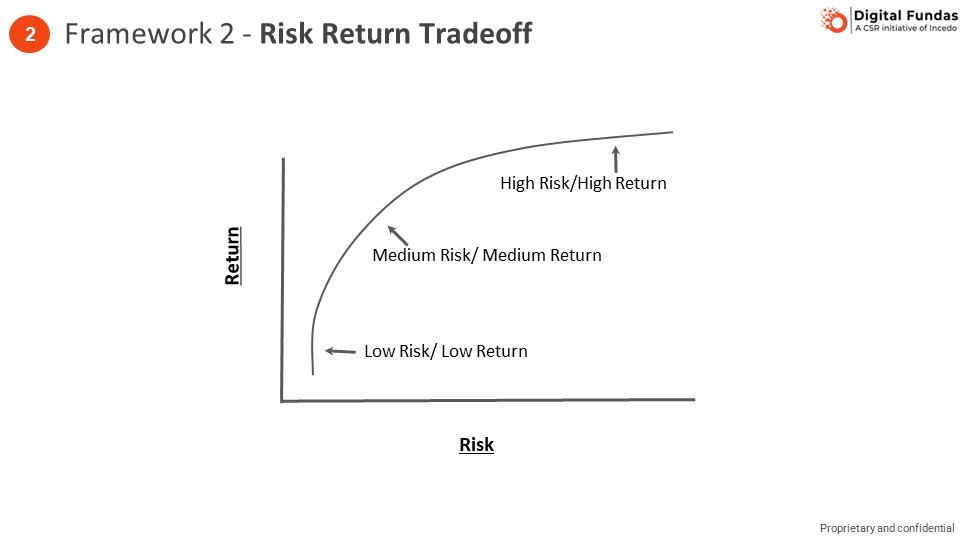 As you make decisions, one of the most important things to understand is the risk-return profile. There is no free lunch. If you want higher returns you will typically need to take higher levels of risk. This is one of the most fundamental concepts in finance but is relevant in personal life too. It is important that we understand our risk propensity. For the same risk-return curve, the point to play might be different for different individuals. A good example of this is a question I’m often asked by students – should I do a start-up right after MBA or work for a couple of years before becoming an entrepreneur? Clearly, there can be no one right answer to this, the answer lies in understanding your risk profile!
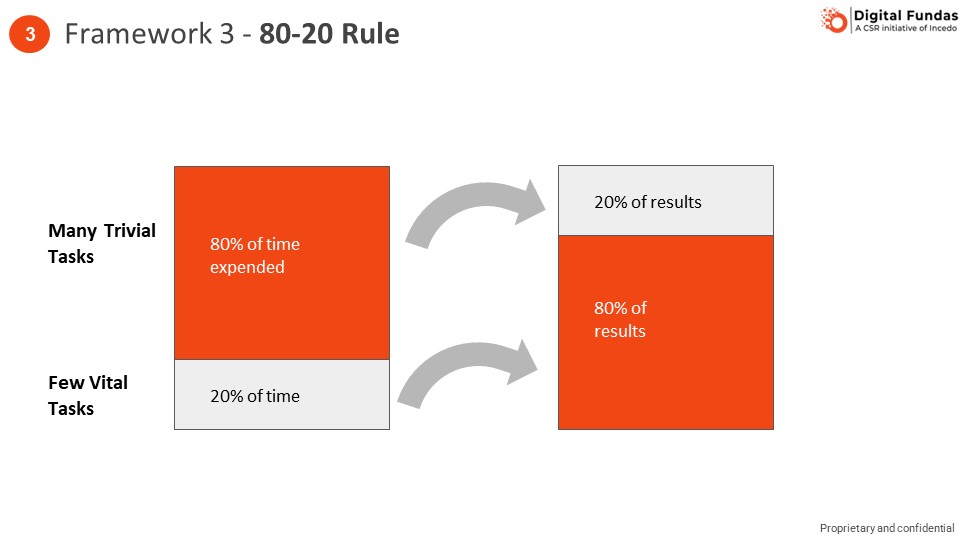 The Pareto principle, or the concept that a few vital tasks drive the majority of results, is a well-known concept. However, not many are able to apply it practically in their daily lives. The reason is, while the 80-20 principle is evident in hindsight, it is difficult to see it with foresight. To improve your 80-20 ability, it is important to make the time to think about it. This is easier said than done, as most of us are so caught up in the flow of routine events that we don’t make enough time to think through our options and approaches. In addition, it is imperative that we make time for reflection. Writing a diary can be very helpful. This practice of reflection can improve the intuition one requires to make the right 80-20 decisions.
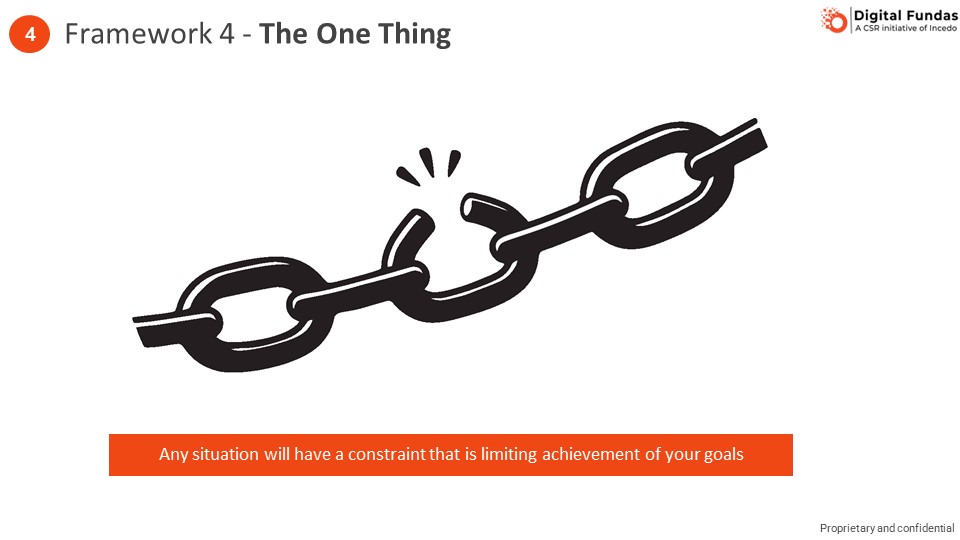 The One Thing is an extension of the 80-20 rule. At early stages of our career we are often obsessed about multi-tasking. However, multi-tasking dissipates energy. You will maximize your chances of success if you focus on one thing at a time. We have finite will power. We need to focus it on where we need it most. The concept of The One Thing can be applied in any situation. The question to ask in any situation is ‘what’s The One Thing I can do, such that by doing it everything else will be easier or unnecessary?’ This concept has been brilliantly illustrated by Eli Goldratt in his book The Goal9, where he demonstrates how a chain is no stronger than its weakest link. Goldratt makes the point that any situation is a system, and that system output is limited by a constraint or a bottleneck. Unless you identify and act on the bottleneck you will not make meaningful progress. So, a very important skill that you need to develop is to identify and zone down on the most critical problem to be solved.
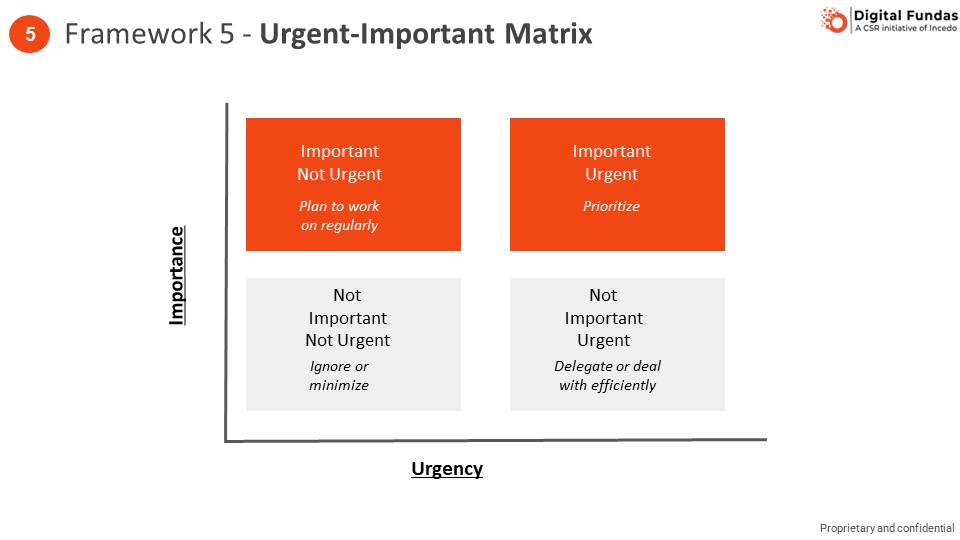 Our natural instinct is to do the urgent tasks first. Instead, we need to shift focus to the important tasks first. If we focus only on the important-urgent quadrant, it keeps getting bigger and bigger until it dominates us. The important-not urgent quadrant is the heart of effective personal management and the key to long-term success. It takes discipline to work on the important- not-urgent tasks. that is why the 80-20 rule is so important. it is only if we have a few well-chosen priorities in this quadrant that we can focus and make progress on them.
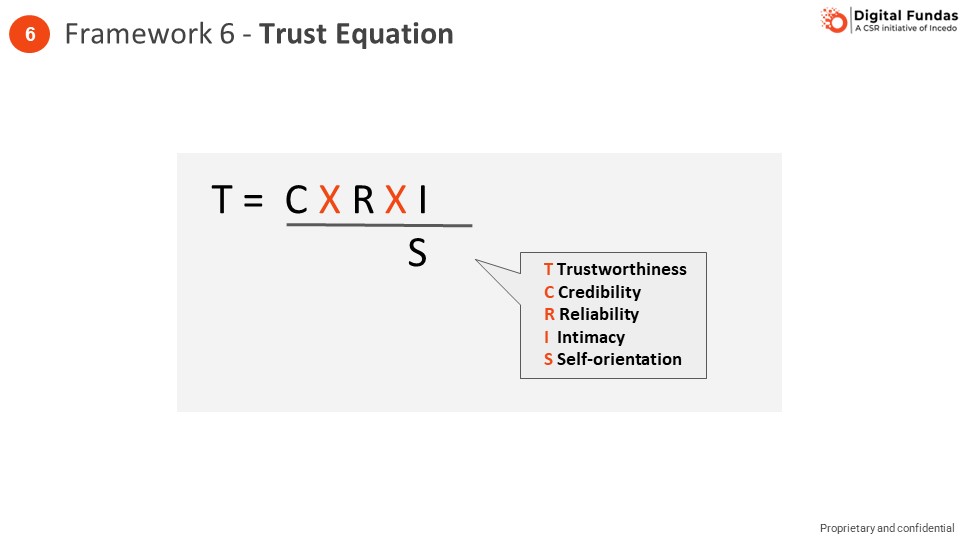 Trust is the foundation of relationships and a key to success, both in our personal and professional lives. It is like a super- powerful lubricant that makes interactions and working together easy and effective. Trust can take time to build. However, once you build trust in a relationship, it moves to a totally different level of effectiveness. Trust equation is a great framework to understand how to build trust. Your trustworthiness is driven by your credibility (expertise, knowledge), reliability (consistency of actions) and intimacy (personal connect). However, the most important driver is self-orientation in the denominator. All the great work resulting from the earlier three factors can be undone by a perception of self-centredness in you. Trust Equation is a good reflection of the human balance of head and heart. Credibility and reliability reflect the head, and intimacy and self-orientation the heart.
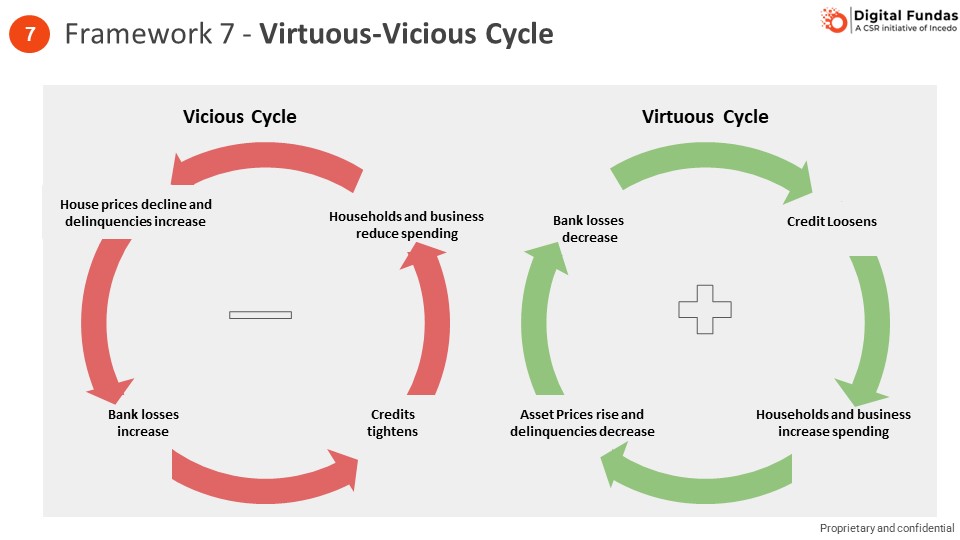 No situation is as good or as bad as it seems. Most times we find ourselves in either a virtuous cycle (positive feedback loop) or a vicious cycle (negative feedback loop). This shows how emotions play a big role in our decisions. We see this in markets, industries and companies. The question is, how to break out of a vicious cycle and move to a virtuous cycle. It is difficult to have perspective when you are in the midst of a cycle. Those who are around you may see it sooner. Seeking advice and help from others will lead you to make the changes required to break out of a negative cycle. Turning a vicious cycle into a virtuous cycle is a critical skill that any business leader needs to have, and especially so in this digital age.
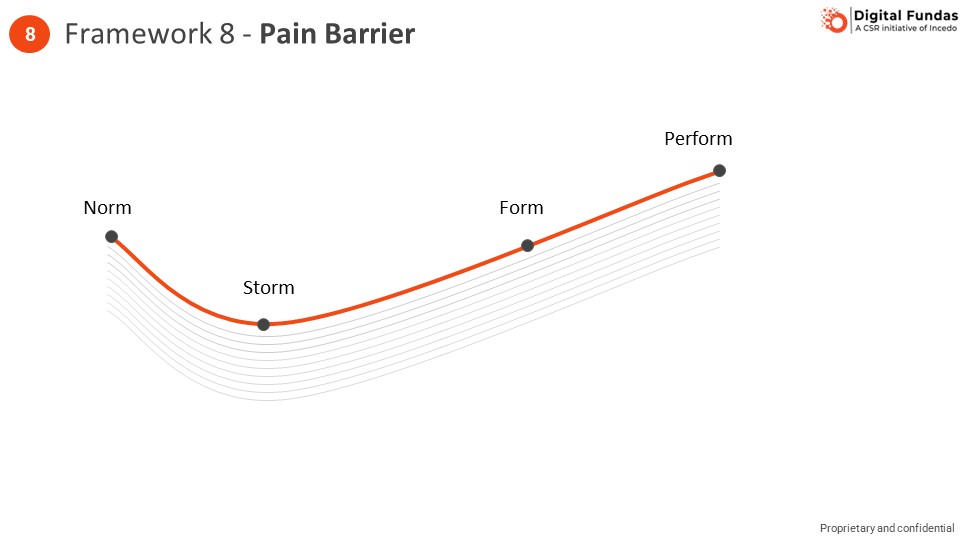 In most tasks you will have to cross a pain barrier to make progress. You go through a period of great pain when you feel like giving up. However, if you battle through the pain barrier, the pain diminishes, and you can go on more smoothly.
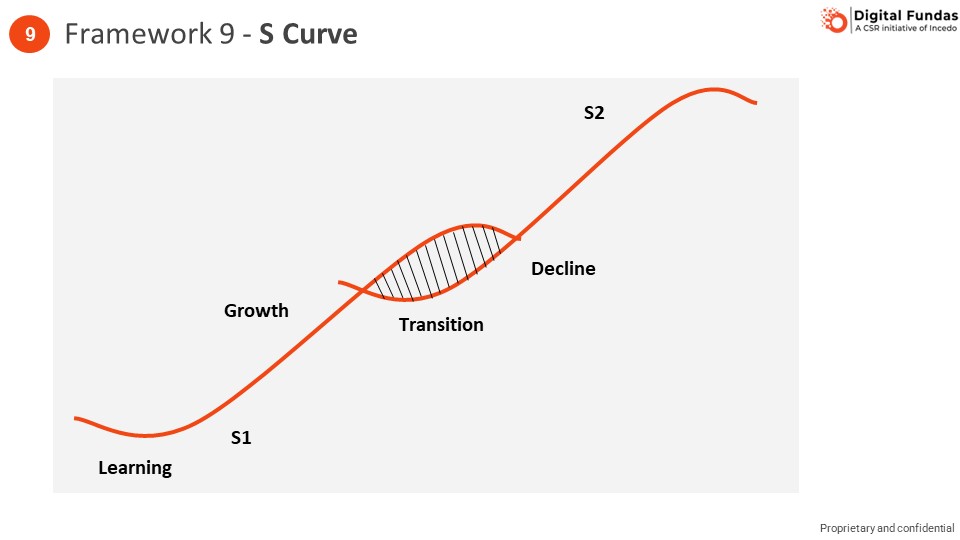 The Sigmoid curve (or the S Curve) is an extension of the learning curve where, after the growth phase, you see a period of maturation and then eventual decline. The S curve represents many business and life situations and has profound implications for both companies and individuals. To ensure sustained growth, you have to move from one S curve to another. The only option for shifting from one curve to another is when you are on your way up. This is because you can never predict the top, and when you are in the decline phase you lose energy. It may be that the first curve is longer than anticipated, in which case you can keep cruising along until you are indeed nearer to the peak. But preparing for the second curve too early is far better than waiting until it is too late, and decline has set in. However, making a shift when you are in a growth phase and things are going well is not easy. You have to break out of your comfort zone. Moreover, when you transition between S curves you will go through a period when the rewards are lower (as you have to battle through the learning phase of the next S curve). Successful individuals and organizations are self-reflective and constantly monitor their own positions on the S curve. Riding the first curve while cultivating the second is always the best option. Clinging to the first and trying to prolong it is a pointless waste of energy. When all is well and you are at the top of your game, then you know it is time to plan your next move. Clearly, being able to identify the nature of the S curve you are operating in, being able to transition from one S curve to the next and then stitch them together, would be key to continued growth.
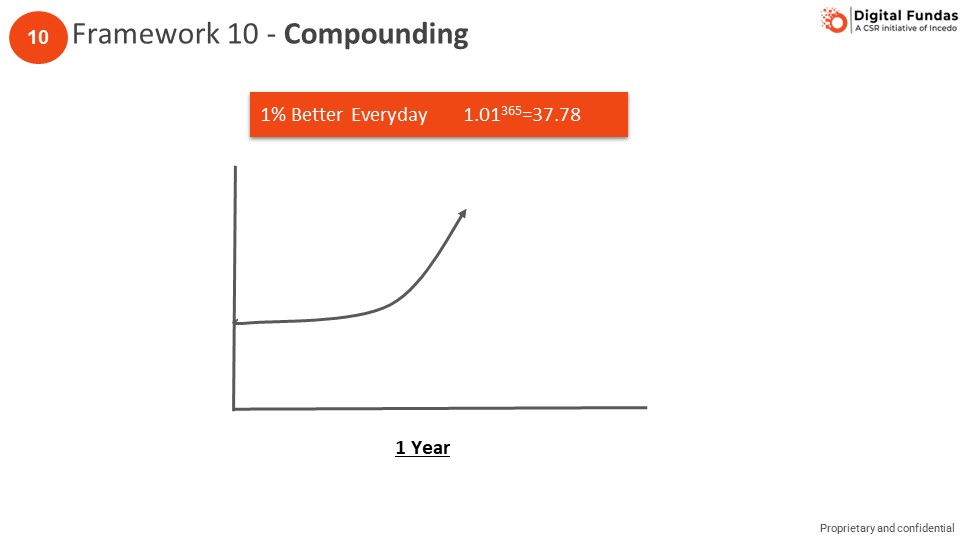 One of the most powerful laws or frameworks relevant in both life and business is compounding. There is great power in tiny but consistent improvements. We all understand the principle of compounding, but it is surprising how few apply it consistently. Some of the most successful business leaders and enterprises I know apply the principle of compounding religiously. They know that staying the course, combined with continuous improvements over a period of time, can produce spectacular outcomes.
In the end, I want to mention another very important factor. That is LUCK.
As I go through life, I realize that success is not a predictable formula. Sometimes your best efforts go to waste and sometimes you get success that you never anticipated. That is the nature of life; it is not linear and deterministic. It is uncertain, with many unpredictable ups and downs. That is why it is very important to have a broad and relaxed perspective of life. This means neither becoming arrogant with success or nor too depressed at failure.
The Bhagavad Gita, talking about karma, says, ‘Karmanye Vadhikaraste, Ma phaleshou kada chana (do your duty but not worry about the results).’ There is deep truth in this. If we realize this truth, both our individual lives and the world around us will improve so much!